

BUY(Buy)
US500 is at 5,200. You expect it to rise to 5,250 and buy.
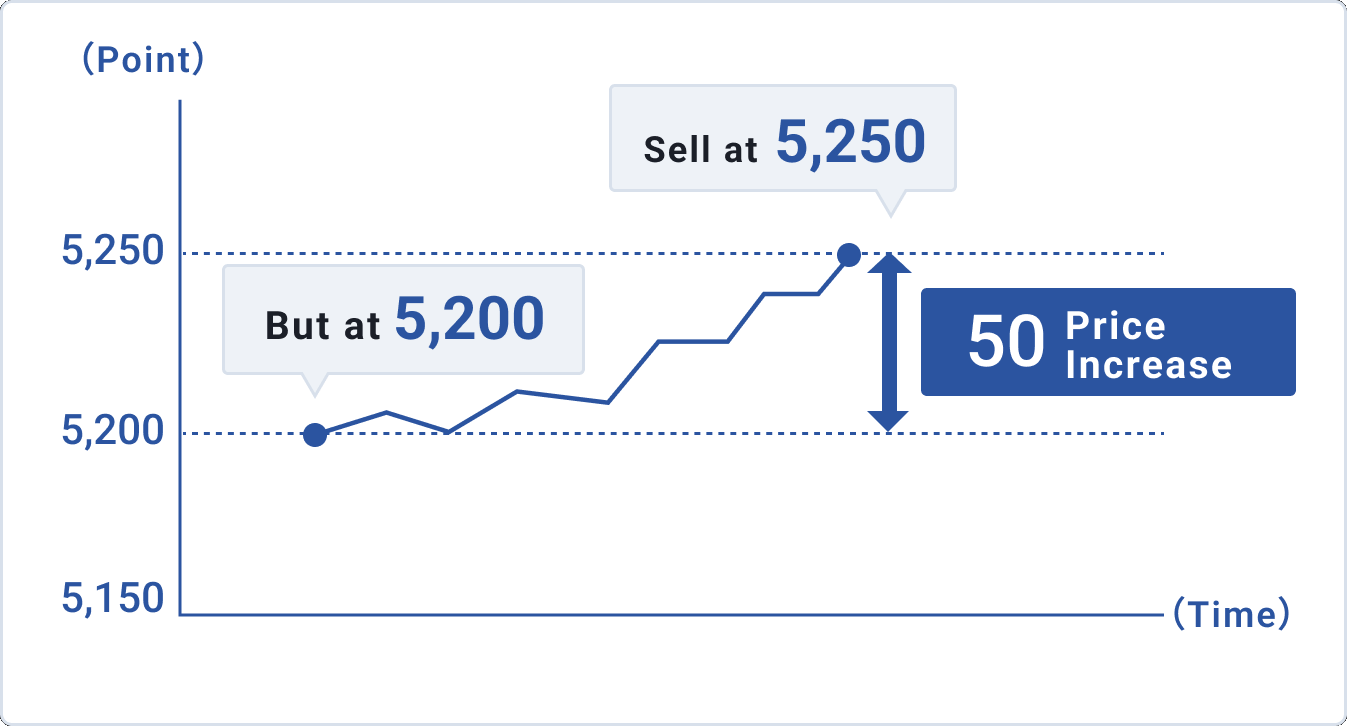
If it rises as expected and you close, the price difference becomes your profit
Stock Indices
Trade the move of a country or a whole market, including US30, US500, NAS100, and JPN225, with stock index CFDs.
This market suits traders who want the direction of the market, rather than one company.
A stock index brings together the share prices of many companies and shows how that market as a whole is moving. It is used to see the direction of the market, rather than one company. Think of it as several companies gathered in one basket. JPN225 (Nikkei 225) is made up of major Japanese companies. US500 (S&P 500) and NAS100 (NASDAQ 100) are made up of major US companies. If you expect the US market as a whole to rise, you can buy US500. If you expect it to fall, you can sell. At ThreeTrader you can trade major stock indices as CFDs without buying every share in the index.
Stock Index CFD Trading
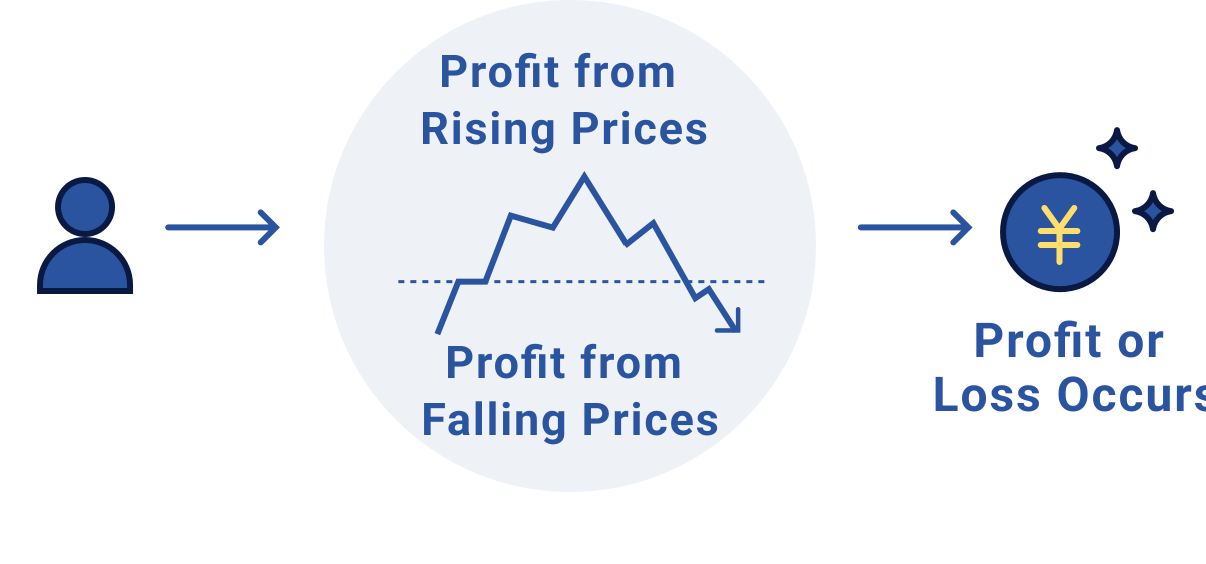
Trading CFDs to profit from predicted rises or falls in stock index prices
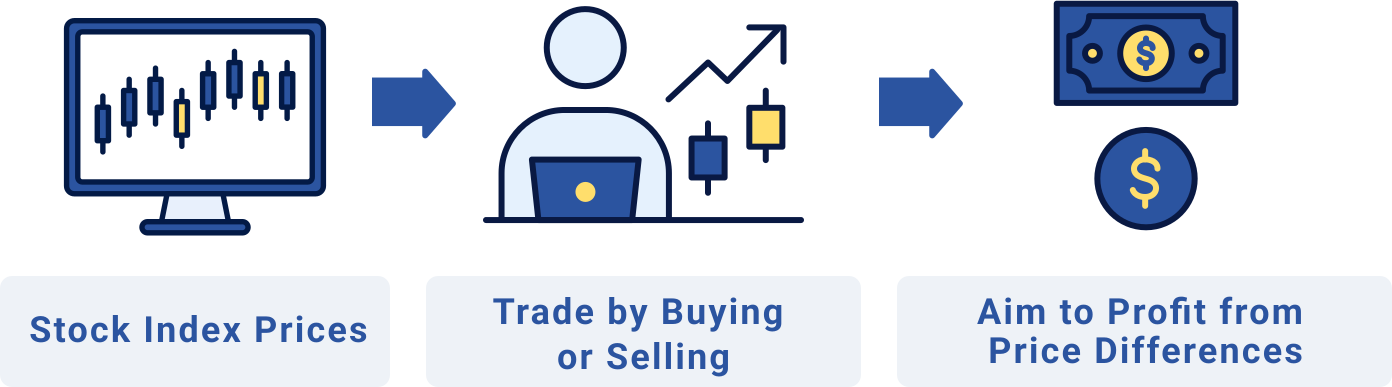
Using US500 (the US S&P 500), here is a simple look at expecting the index to rise, and expecting it to fall.
US500 is at 5,200. You expect it to rise to 5,250 and buy.
If it rises as expected and you close, the price difference becomes your profit
US500 is at 5,200. You expect it to fall to 5,150 and sell.
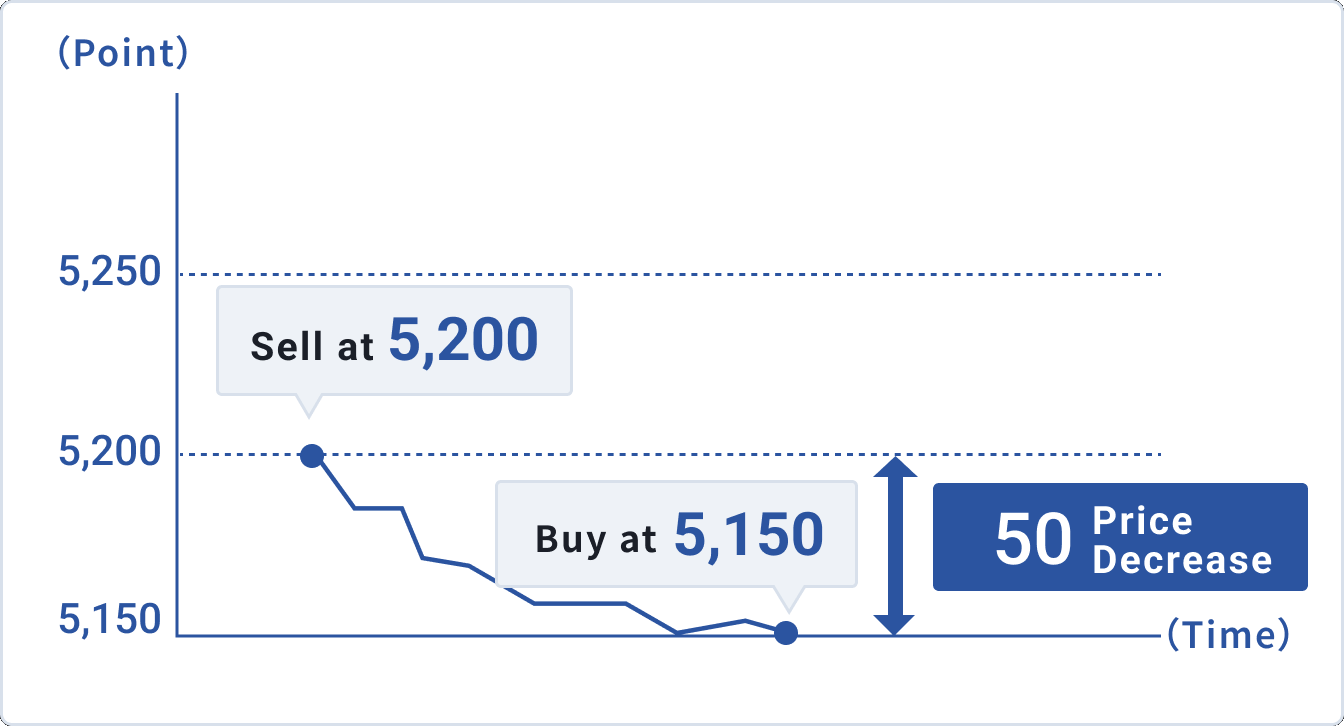
If it falls as expected and you close, the price difference becomes your profit
※ Prices are examples. Actual profit or loss also depends on trade size, spread, commission, and swap.
Individuals are not the only participants. Companies, institutions, and others take part, each for their own purpose.

Pension and asset managers
Allocate capital across the market

Hedge funds
Use indices in their strategies

Banks and brokers
Client and market trades

ETF investors
Hold index-tracking products

Individual traders
Trade index price moves
Index-tracking products such as ETFs hold the underlying product. A stock index CFD trades the index price move, with no delivery of the underlying product.
Index-tracking products
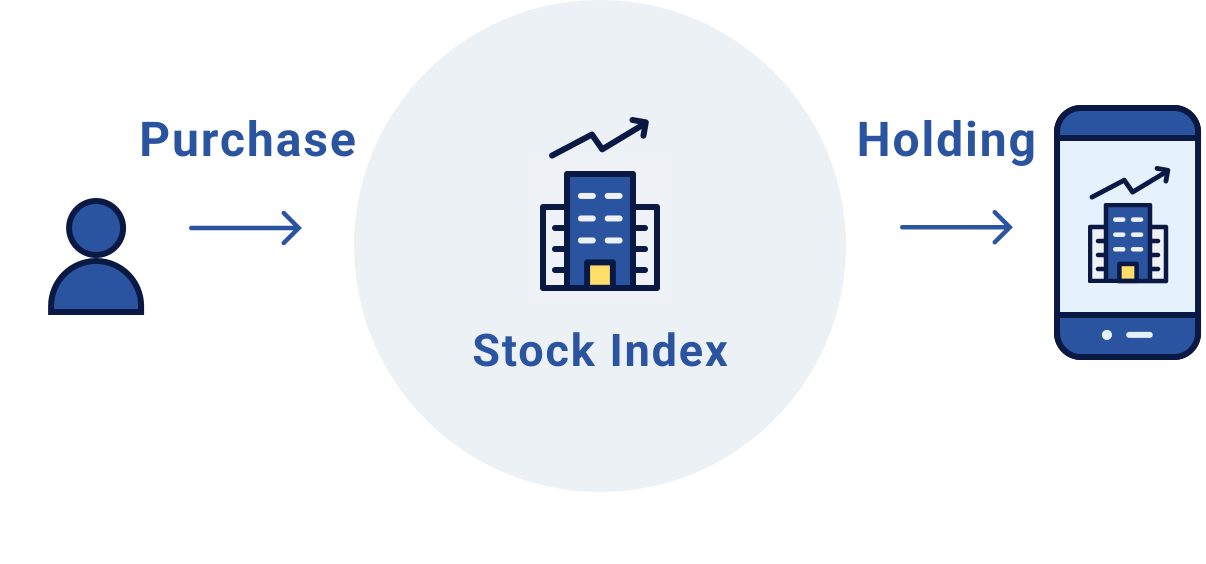
 Buying and holding products such as ETFs
Stock index CFDs
 Trading based on price movements
| Compared | Index-tracking products | Stock index CFD |
|---|---|---|
| What you trade | A physical product such as an ETF | The price move of a stock index |
| Delivery | You buy and hold the product | No delivery of the underlying product |
| Rising and falling prices | Hold, then sell | Trade from both buy and sell |
| Capital required | Based on the purchase price | Trade on margin with leverage |
※ With a CFD, leverage can increase losses as well as profits. Keep spare margin and manage the risk.
Here are three things that set this market apart.
01
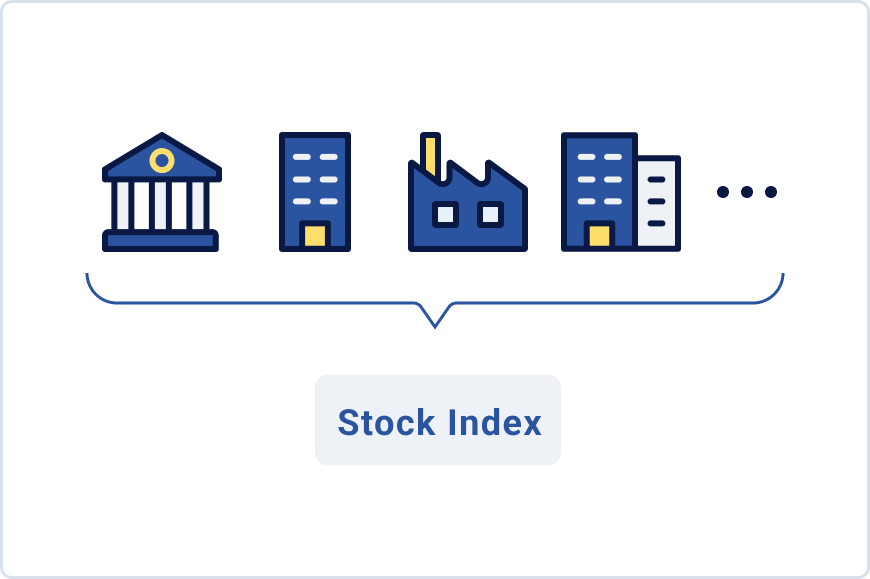
An index combines the moves of many companies, so you can trade the direction of the market without picking shares one by one.
02

Choose a major index from the country or region you follow, including the US, Japan, Europe, and Hong Kong.
03
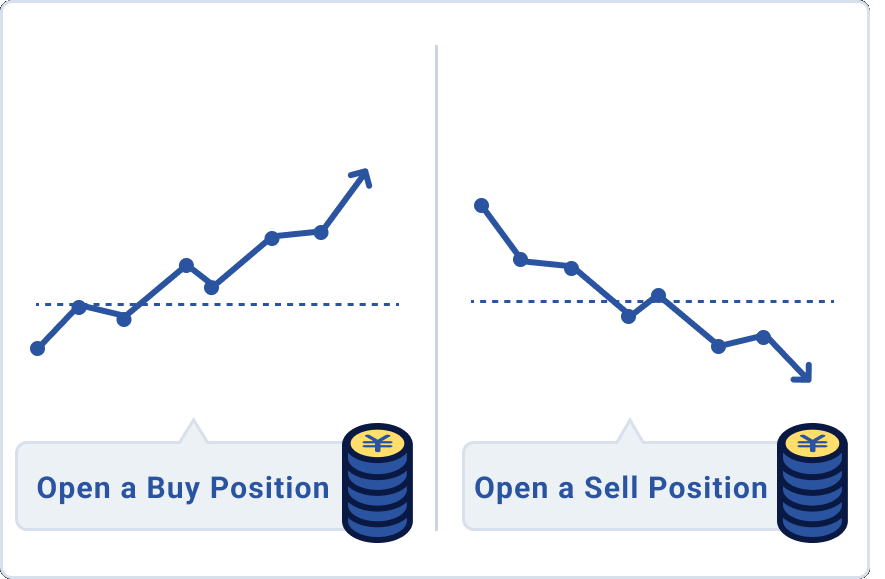
Buy when you expect the market to rise, or sell when you expect it to fall.
Check trading hours, platforms, leverage, the main symbols, and the trade size for major stock indices.
| Item | Details | Notes |
|---|---|---|
| Platform | MT4MT5 | MT4MT5supported |
| Maximum leverage | Up to 500:1 | The cap differs by symbol and session* |
| Main symbols | US30 / US500 / NAS100 / JPN225 and others | Major indices worldwide |
| Trade size | Depends on the symbol | See the product specification |
Trading hours follow MT4 / MT5 server time. Server time follows US daylight saving time: GMT+3 in summer and GMT+2 in winter. Check the latest hours on MT4 / MT5.
Trading hours differ by symbol. Maximum leverage can also change by symbol and session. See the detailed product specification.
| Item | Details | Trading days |
|---|---|---|
| United States | US30 / US500 / NAS100 / US2000: 01:00–24:00 USIDX: 03:00–23:59 VIX: 01:00–24:00 | Mon–Fri |
| Oceania | AUS200: 01:50–08:30, 09:10–23:00 | Mon–Fri |
| Europe | UK100: 04:00–24:00 FRA40: 10:00–24:00 GER40: 03:15–24:00 EUSTX50 / NETH25 / SWI20: 10:00–24:00 | Mon–Fri |
| Asia | TW88: 03:45–08:45, 09:15–23:45 JPN225: 01:00–24:00 HK50 / HSCHKD: 04:15–07:00, 08:00–11:30, 12:15–22:00 SGCSGD: 03:30–12:20, 12:50–23:45 CHCUSD: 04:00–11:30, 12:00–23:45 | Mon–Fri |
※ Trading hours follow MT4 / MT5 server time.
Pure Spread accounts have no trading commission. Raw Zero accounts are subject to trading commissions based on the account currency:
– JPY accounts: JPY 400 per lot, round trip
– USD accounts: USD 4 per lot, round trip.
Leverage varies by instrument. We offer leverage of up to 1,000:1 on forex and precious metals. Please see the Trading Products page for leverage and trading conditions for each instrument.
Swaps are applied to the account at the New York market rollover. To check the current long and short swaps for an instrument, right-click it in MT4/MT5 Market Watch and select Specification. If Market Watch is not visible, select View > Market Watch.
Swap points are adjustments reflecting the interest-rate differential between the two currencies in a pair. Selling a lower-interest currency and buying a higher-interest currency may result in a daily credit, while the reverse may result in a debit.
Contract size is the amount of the underlying instrument represented by one lot. It varies among forex, precious metals, crude oil and stock indices. Check each instrument's specifications in MT4/MT5 before trading.
Trade major world indices such as US500, NAS100, and JPN225. Open an account and start trading stock index CFDs.

