

BUY(Buy)
When WTI crude is 70, you buy because you expect it to rise to 72.
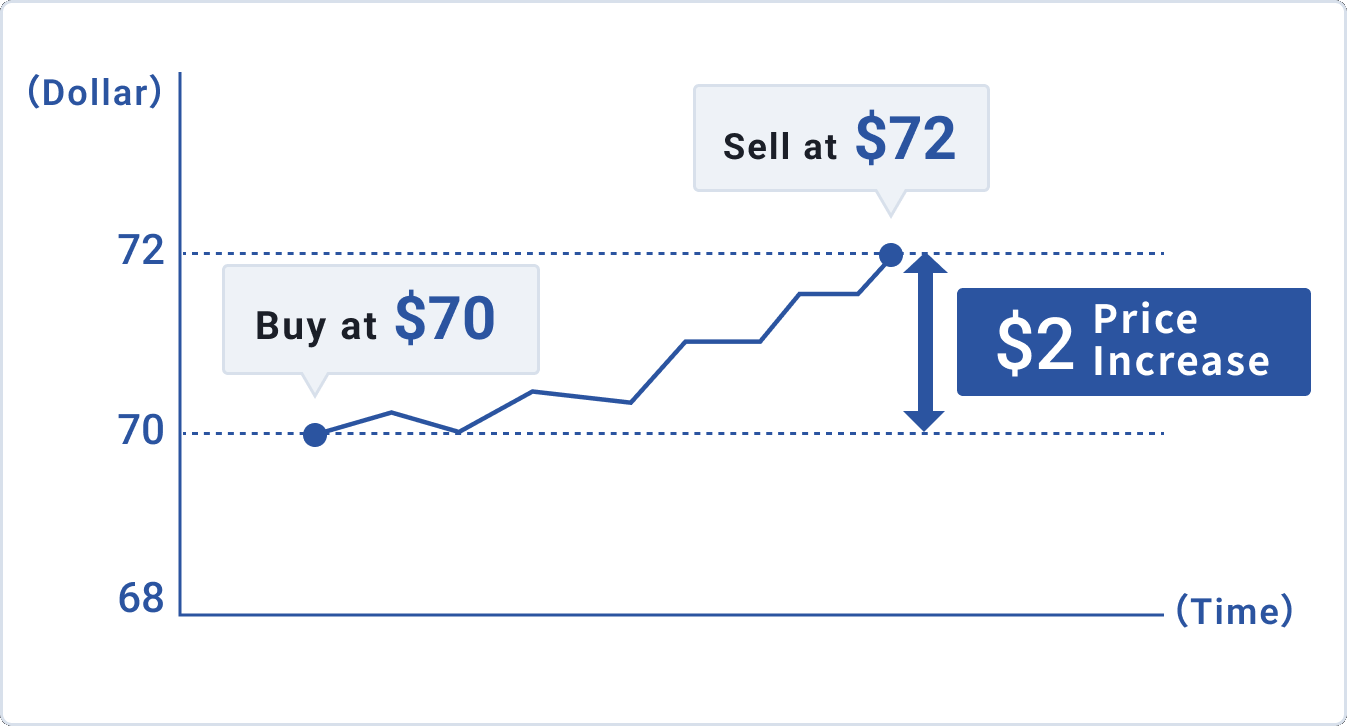
If it rises as expected and you close the trade, the price difference becomes your profit
Crude oil
Trade price movements in WTI and Brent crude. Supply and demand, inventories, OPEC+, and geopolitics are reflected in energy-market prices.
Crude oil trading is about price movements in major benchmarks such as WTI and Brent. Crude oil is a feedstock for gasoline, jet fuel, and plastics, and it is essential to logistics around the world. When the price rises, everyday costs such as fuel, airfares, and delivered goods can be affected. At ThreeTrader you can trade crude oil as a CFD. If you expect the price to rise, you can buy. If you expect it to fall, you can sell. You do not need to hold or store the oil itself.
Crude Oil CFD Trading
Trading that aims to profit from predicted rises or falls in crude oil prices.
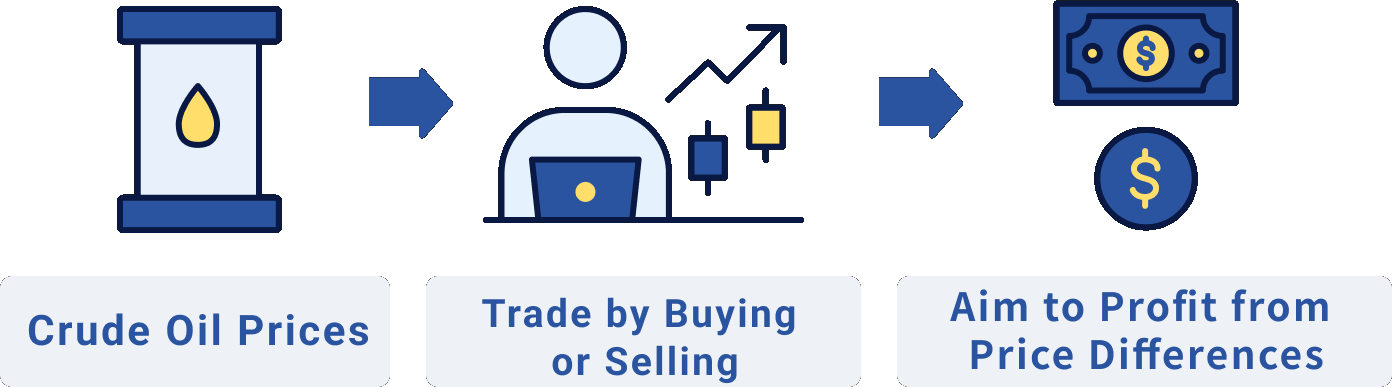
Using WTI crude as an example, here is a simple look at buying when you expect the price to rise, and selling when you expect it to fall.
When WTI crude is 70, you buy because you expect it to rise to 72.
If it rises as expected and you close the trade, the price difference becomes your profit
When WTI crude is 70, you sell because you expect it to fall to 68.
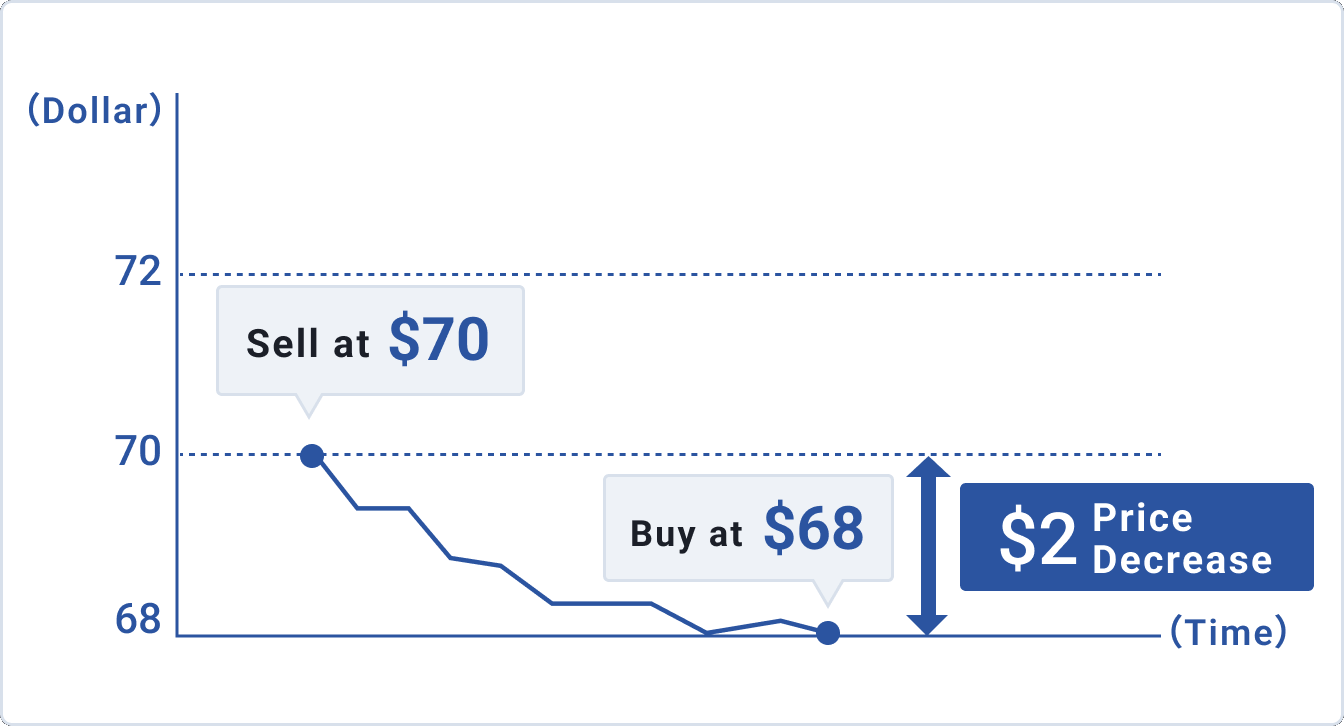
If it falls as expected and you close the trade, the price difference becomes your profit
※ Prices are examples for explanation. Actual profit and loss depend on trade size, spread, fees, swaps, and similar factors.
Alongside individual traders, companies and institutional investors take part for their own reasons.

Producers
Produce and supply crude oil

Airlines and transport
Manage fuel costs

Energy companies
Physical trade and hedging

Institutions
Diversification and risk management

Individual traders
Trade price movements
Physical crude oil requires storage and delivery. A CFD does not deliver the oil itself. You trade the price movement.
Physical crude oil
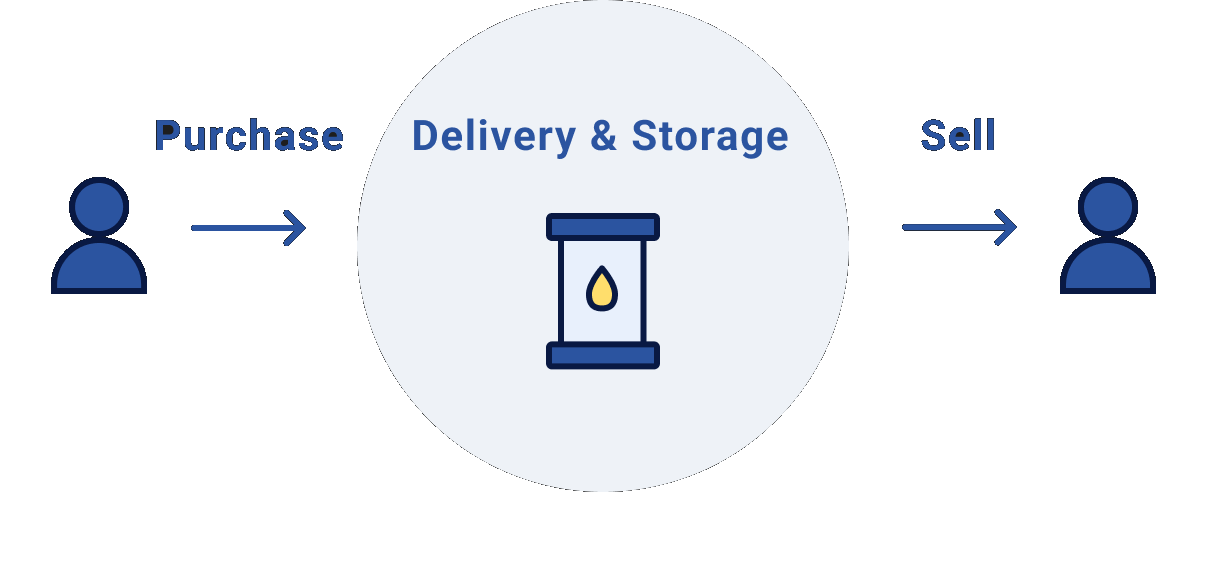
 Trading that involves receiving and storing crude oil
Crude oil CFDs
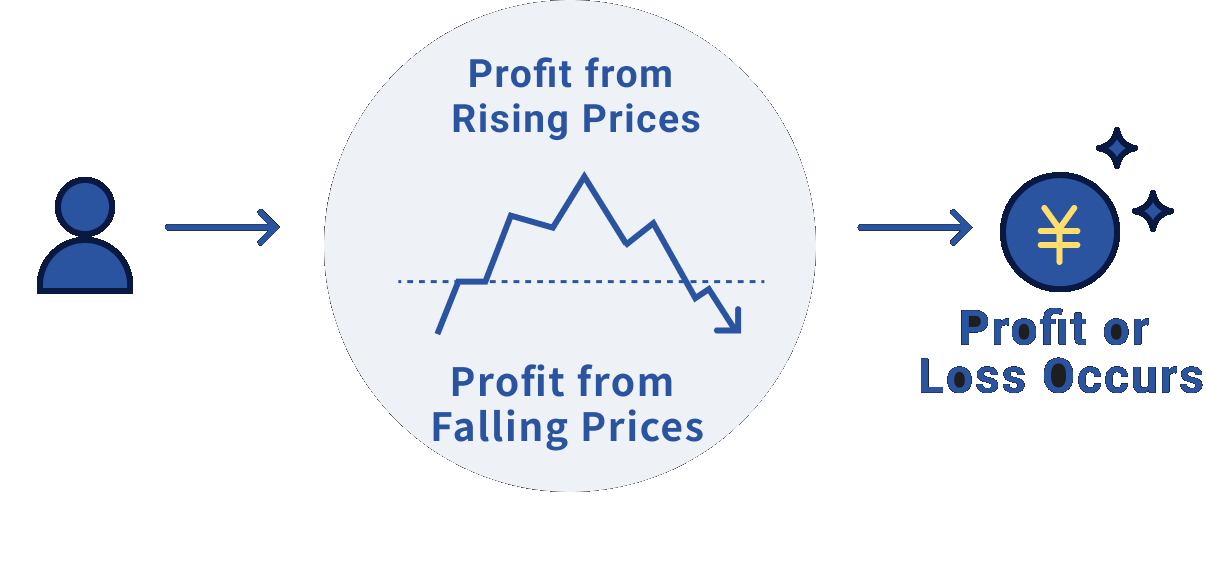
 Trade based on expected price movements
| Comparison | Physical crude oil | Crude oil CFD |
|---|---|---|
| What you trade | Actual crude oil | The crude oil price |
| Physical delivery | Delivery and storage required | No physical delivery |
| Rising and falling prices | Buying, holding, and selling | Trade from both buy and sell |
| Capital required | Based on the purchase price | Trade on margin with leverage |
※ With CFDs, leverage can increase losses as well as profits. Keep spare margin and manage risk.
Here are three features that are particular to this market.
01
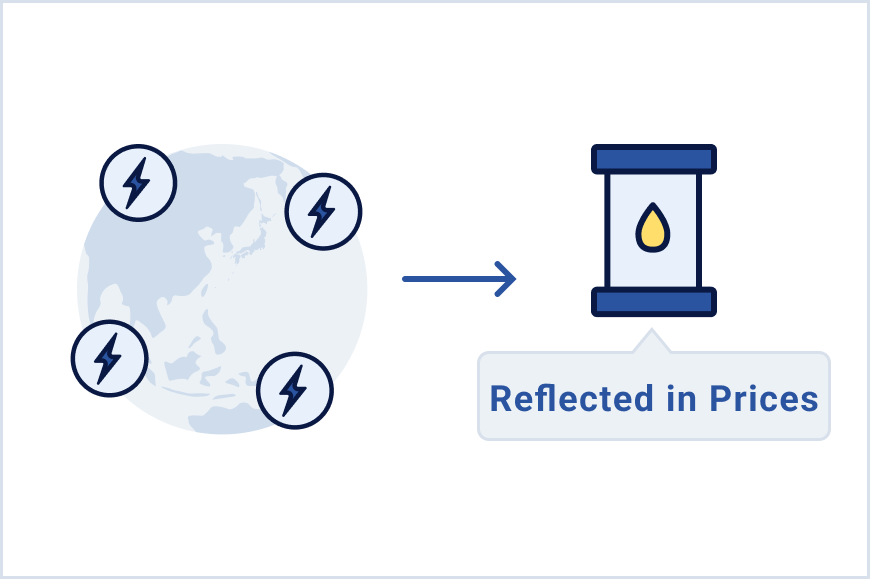
Changes in production, demand, and inventories tend to be reflected directly in the price.
02

OPEC+ decisions, inventory reports, and events in the Middle East can lead to larger moves.
03
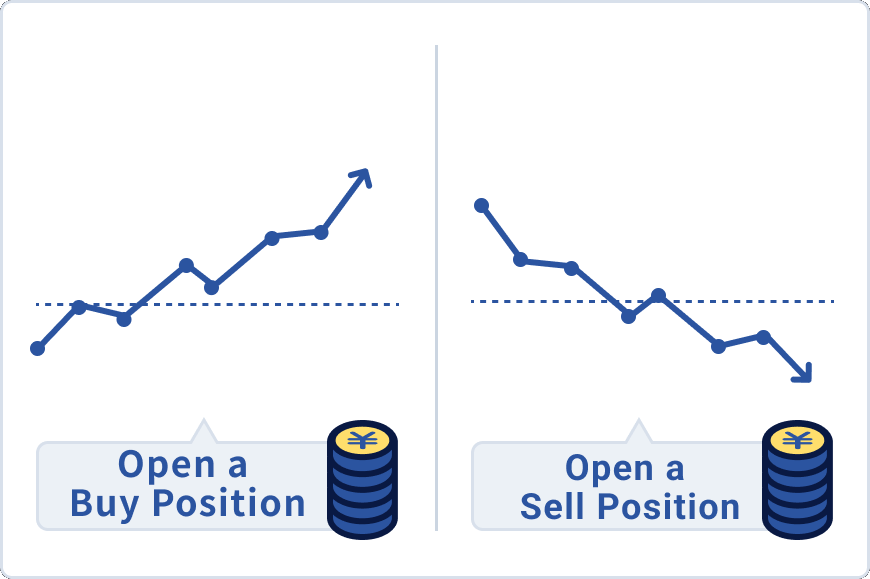
If you expect the price to rise, you can buy. If you expect it to fall, you can sell.
Check trading hours, platforms, leverage, main symbols, and trade size for WTI and Brent.
| Item | Details | Notes |
|---|---|---|
| Trading hours | XTIUSD: Mon–Fri 01:00–23:55 XBRUSD: Mon–Fri 03:00–23:55 | MT4 / MT5 time* |
| Platforms | MT4MT5 | MT4MT5supported |
| Maximum leverage | Crude oil: up to 200:1 | The cap depends on equity and the time of day* |
| Main symbols | XTIUSD / XBRUSD | WTI / Brent |
| Trade size | Depends on the symbol | See the contract specifications |
Trading hours follow the MT4 / MT5 server time. Server time tracks US daylight saving time: GMT+3 in summer and GMT+2 in winter. Check the latest hours on MT4 / MT5.
Maximum leverage depends on equity and the time of day. Check the contract specifications and trading conditions.
Pure Spread accounts have no trading commission. Raw Zero accounts are subject to trading commissions based on the account currency:
– JPY accounts: JPY 400 per lot, round trip
– USD accounts: USD 4 per lot, round trip.
Leverage varies by instrument. We offer leverage of up to 1,000:1 on forex and precious metals. Please see the Trading Products page for leverage and trading conditions for each instrument.
Swaps are applied to the account at the New York market rollover. To check the current long and short swaps for an instrument, right-click it in MT4/MT5 Market Watch and select Specification. If Market Watch is not visible, select View > Market Watch.
Swap points are adjustments reflecting the interest-rate differential between the two currencies in a pair. Selling a lower-interest currency and buying a higher-interest currency may result in a daily credit, while the reverse may result in a debit.
Contract size is the amount of the underlying instrument represented by one lot. It varies among forex, precious metals, crude oil and stock indices. Check each instrument's specifications in MT4/MT5 before trading.
Trade price movements in WTI and Brent from MT4 and MT5. Open an account and start trading crude oil.

